

Disclosure: As an Amazon Associate, I earn a small commission from qualifying purchases if you buy something through one of my links. Don’t worry, I only promote products or services that we have used or would want to use ourselves!
Several people have asked me about the off grid alternatives we use for things like lights and refrigeration in our yurt, so naturally I thought a blog post on the subject would be in order!
I tried to cover most of the things that require electricity in a normal grid-tied house. I’ve even added links to some of the things we’ve purchased. Who knows, maybe you’ll want to try reducing your family’s reliance on the grid too!
Note – Now I will begin by saying that while it is true that we are not currently connected to the power grid at the yurt, we currently have access to electricity very nearby at Mom and Dad’s house and in the shop. So we do use electricity for some things, but it’s a little more complicated than just flipping a switch.
Lighting

The question I seem to get most often is what do we do for lighting? We use lots of different methods to light the yurt, but our regular go-to options are battery powered twinkle lights strung around the perimeter of the room, various oil lamps and lanterns I’ve collected, and a rechargeable Milwaukee flashlight that we set on a shelf and angle at the ceiling, which reflects a good deal of light back down into the room.
We also use rechargeable puck lights tacked up under shelves for quick task lighting, LuciLights (solar lamps), and we wear these headlamps outdoors when we’re doing chores after the sun goes down.
When all of our lights are turned on, the yurt is actually quite bright, even in the dead of night. However, the batteries for the twinkle lights get expensive if they are used excessively (three AAs per strand, and we have six strands), and we only use a very high grade, clean-burning oil in our lamps, which costs quite a bit, and the rechargeable items take time to recharge, so most evenings we only use the minimum amount of light necessary. (When we have new guests over for dinner, we treat them to an evening with all the lights on, but once they’ve visited a few times, we treat them like family and only turn on a few lights!)
Another note about lights:
Not having light at the flick of a switch has really helped us get in tune with the cycles of nature around us. When we had electric lights in our house in town, we could stay up as late as we wanted and get stuff done even after midnight, but then it was really hard to transition to bed because we’d just come out of all the bright lights. Now in the yurt, there’s more of a rythm to the days.
In the summer we can get an early start on the day and work on prjects late into the evening, but in the winter things start wrapping up around 4:30pm, and after dinner we read a few stories, get the evening chores done, and head straight to bed. The short cold days force us to slow down and hibernate, and the long hot days motivate us to be outside and get lots done! It’s a very natural feeling, like life is meant to be this way.
Refrigeration
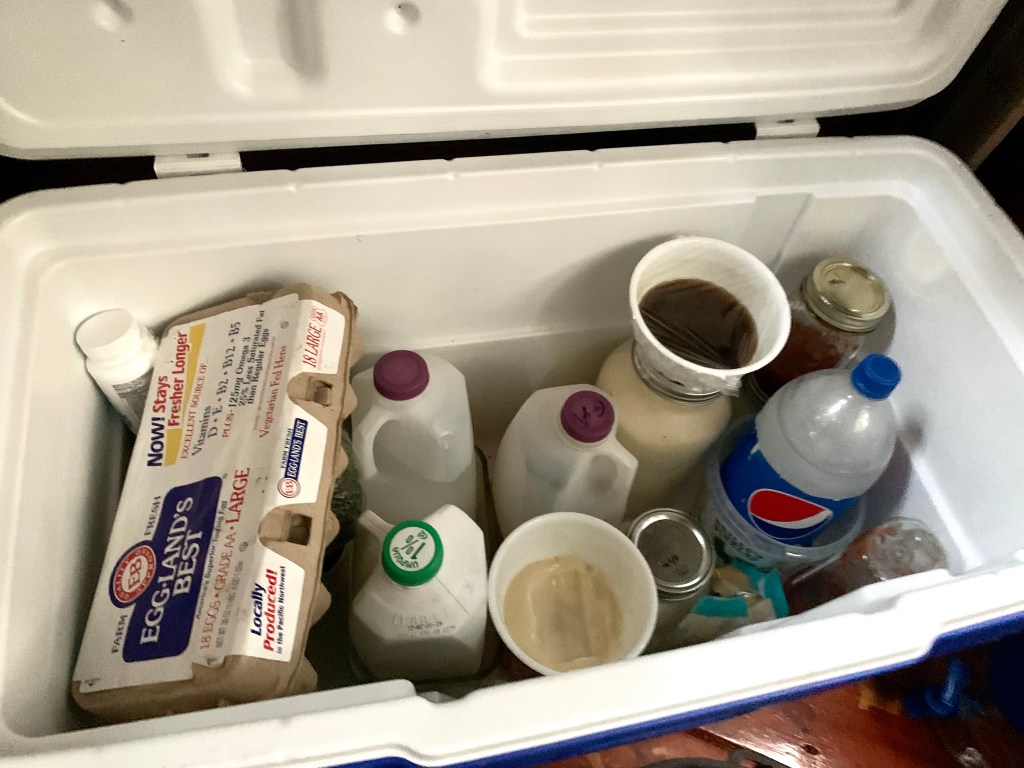
Refridgeration in the yurt has been the trickiest thing to find an off grid solution for. Our first thought was to build a springhouse, but our creek doesn’t run fast enough in the summer to keep it cool, and all of our springs are too far away to be convenient for daily food storage. Digging a root cellar might be an option someday, but I’m worried that it might flood in the winter since our clay soil holds so much water.
For now, we have an chest cooler in the kitchen, and we keep it stocked with half gallon jugs of ice, which we swap out each night for fresh ones from the freezer in the shop. That keeps it plenty cool enough for veggies and leftovers and condiments and such.
We do keep some dairy and meat products in the cooler, but only as much as we can go through in a few days. If we have lots of dairy or fresh meat we’re not gonna use right away, we keep it in a minifridge in the shop. Just to be on the safe side.
Rechargable Items
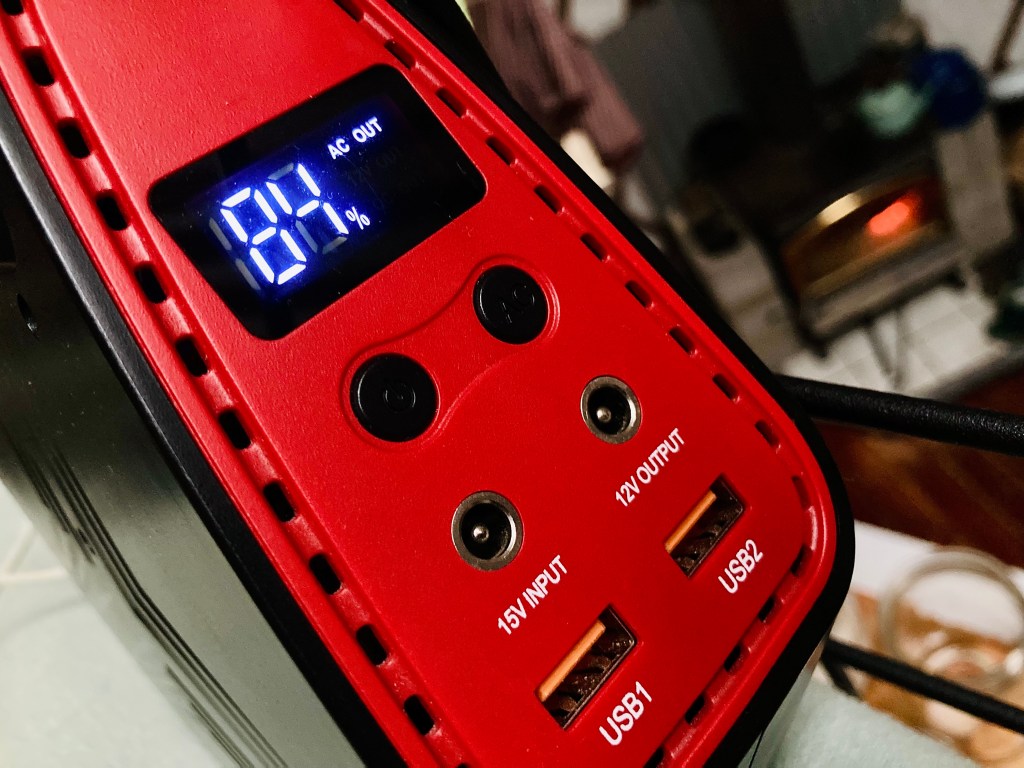
Phones, computer, rechargable lights, vacuum, power tools, etc – basically all the electrical things we didn’t want to give up in our primative lifestyle. We still have these things, we just have to be a bit more intentional about conserving the batteries.
Most of electronics are powered using our computer battery bank (this thing is seriously awesome!), which has both USB and standard outlets. We just use it like a normal wall outlet (but imagine only having one outlet in the house!). When that battery bank gets low, we charge it in the shop, usually overnight.
We tried skipping the vacuum altogether and just sweeping with a broom, but due to the way our floor was built (we bought the decking used with the yurt) there are deep cracks between each board, and it’s nearly impossible to get them cleaned out without a vacuum. So we bought a Craftsman cordless stick vacuum, and we have two rechargeable batteries for it – we just swap them out when the one inside needs recharged.
Our power tools are stored in the shop where Cody has a workbench set up, and they all have rechargable batteries that stay plugged in there.
Ironing, Sewing, & Washing

Laundry is washed in our machine in the shop and dried on a heavy duty clothesline behind the yurt or on these drying racks (my favorite that I’ve used so far), and in the winter when it’s too wet out to use the clothes line, I use Mom’s dryer next door (our yurt can’t handle the humidity load of drying all our clothes indoors). I also have a hand washing laundry plunger and a wringer, but I don’t tend to use them very much. Maybe I’ll try again next summer when I can do it outside.
I try to smooth the wrinkles out of most of my clothes while they’re still wet (and then they dry without wrinkles!), but for stubborn fabrics I found some antique irons at a thrift store, and they work like a charm! I just heat them up on the stove, use a hotpad to pick them up, and iron on an ironing board like normal. You can use a spritz bottle to add water to your clothes to mimic the automatic steam-iron function.
For sewing and mending, I have my beloved treadle sewing machine. It’s my baby, and it’s amazing.
A Dehumidifier
Of course, not all things can be powered by batteries and mini solar panels. And unfortunately, it does look like we may soon have to purchase a 200′ extention cord to run from the shop to the yurt in order to power a heavy duty dehumidifier.
Due to our extremely wet climate here in the coastal PNW, and the fact that we live in nearly total shade in the winter, and being surrounded on all sides by various bodies of water, we’re constantly fighting against the mold that wants to take up residence the nooks and crannies.
Despite keeing a hot fire going all hours of the day and doing our best to ventilate extra steam through the dome, in the cold weather our windows are always covered in condensation, and everything in the corners just starts to feel a little damp. The moisture produced by us breathing and cooking and washing dishes combined with the thin insulation of the yurt creates a perfect storm, and it’s just too much humidity to properly ventilate without a fan.
Letting mold get establisted in the yurt would be a serious problem, especially if it got into the lattice. Raw wood is notoriously difficult to clean on a good day, but the way the lattice criss-crosses over itself creates hidden spots that are basically impossible to get to. So to prevent our yurt from becoming a health hazard, we’ve decided to bite the bullet and get a dehumidifier, even though that means having to run an extention cord.
Off grid is the ideal, but sometimes you gotta do what you gotta do. Hopefully we’ll find a better solution in the future.
(Update: we have since purchased these, and it has totally revolutionized our life here in the yurt – we can now hang laundry to dry inside and not even have moisture build-up in the windows!)
Future Plans
Someday we would like to set up either a solar array or possibly a hydroelectric system for more convenient electricity inside our home. Cody has a book on mini hyrdo systems and I know he’d really like to figure out a way to do it here (I keep catching him sketching out plans on scraps of paper lol). To do solar, we’d need to create a spot that would get enough sunlight for enough hours to make it worth it, which is tricky since we’re surrounded by trees and hills.
But both of those options are still a little ways away. We’ve got several other projects that need to happen before we start putting money into a permeant electrical system for our property, so for now we’re content to find non-electrical alternatives for most things, and piece together solutions for power when we need it.
So that’s how we do things around here without regular electricity! Hope I’ve inspired some of you. 😉 Let me know in the comments if I missed anything and I’ll do my best to answer!

 Feels Like Homestead
Leave a comment